
Digital Decode
Hear from the 2nd Cohort!
-
![]()
"I really enjoyed the final creative assignment because I enjoy writing and I got to put my thoughts into words through my poem. I don't usually have much time for myself, even though it was an assignment, I enjoyed writing it as if it were my free time."
Cohort 2
-
![]()
"I loved the midterm and final project. It opened a door for my creativity and I discovered that I like creating digital content like videos on VoiceOver."
Cohort 2
-
![]()
"From the beginning of this program I felt very comfortable, Angie was very nice and the girls in this program were really kind as well and that's what makes it so that we were all comfortable asking questions, it felt like a true judgement free-zone!"
Cohort 2
-
![]()
"Angie was very helpful explaining the topics and answering questions, also with guiding the conversation because Angie makes us, or specifically me, feel confident and comfortable enough to talk and express my thoughts."
Cohort 2
-
![]()
"Digital Decode helped me work on my communication and presentation skills. Being more so on the shy side made me nervous to join zoom meetings with people I didn’t know, but the environment was very welcoming and open which gave me the opportunity to branch out!"
Cohort 2
-
![]()
"A glow about the program is how much we learn during our meetings, it is only 2 hours but I feel that we are able to cover a lot of issues and problems going on."
Cohort 2
-
![]()
"I like how informative our topics are, I think my favorite one so far had to deal with Black wealth erasure. I also enjoy being in this program. It's a nice afterschool activity."
Cohort 2
-
![]()
"Before starting the program I thought we’d be broadly discussing experiences as a person of color, especially as women, but we’ve dived into topics I’ve never really sat there and thought about. For example, I’ve thought about Ellis Island but not necessarily how disability came into play."
Cohort 2
-
![]()
"I worked on my time management skills whether it was joining our meetings on time or completing assignments while managing schoolwork and other extracurriculars. I would also say I really worked on my empathy and understanding for what others go through, as there are so many vulnerable topics we discuss."
Cohort 2
-
![]()
"I love everything about the program. I look forward to meeting with everyone every week."
Cohort 2
-
![]()
"Angie was always very accessible and flexible when it came to homework or meetings. She was always a text or email away, and she always worried about our disposition of time"
Cohort 2






2nd Cohort’s Art and Written Projects

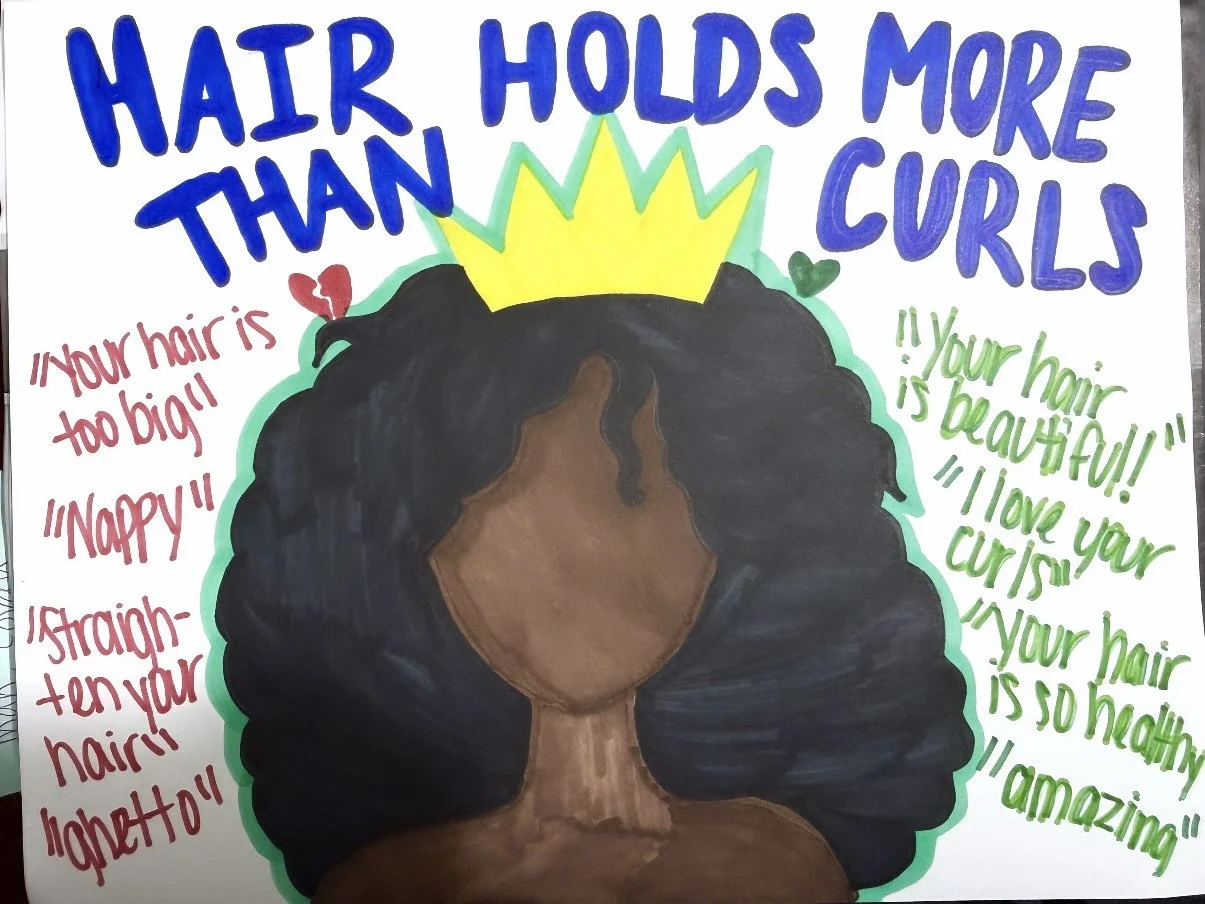
Poem #1
Our hair does not grow the same.
Her hair is long, straight strands
falling below her shoulders.
My hair grows straight to the sun,
basking in its warmth,
coiling up to say hi.
Her hair is “perfect” with almost no effort,
beautiful beyond words,
pretty no matter what she does.
My hair requires a bit more effort
finding the right products
and the right methods.
Some days my hair seems like a real hassle,
and I wonder what it would be like
having that “perfect” straight hair.
Then I remember my ancestors,
how they used this same hair
to help make maps, hide food.
It was not just hair on the top of their heads,
it was a tool used for communication
made resourceful by their efforts.
I see people with hair just like mine
going through similar struggles:
hair being at awkward lengths,
and not seeming like it’s a lot.
But I see beauty in them that I cannot see in myself,
their hair looks perfect
fitting them perfectly
I see people loving, embracing,
and cherishing their coils and curls.
It makes me remember
my community, my family,
my worth.
I wouldn’t change my hair for the world,
no matter how much of a hassle it brings.
I’m happy with my hair,
I'm happy to have these coils.
These coils growing straight to the sun,
basking in its light,
communicating with nature,
every bounce telling its own story.
No matter who may try to put me down,
even if it is myself,
I will always remember where I come from
and who I represent.


What does a promise mean to the United States?
I come from parents
who sought to live the American dream.
Parents who arrived in New York,
lost and frightened of its structure.
One figure stood out, the Green lady.
They admired her as she stood in the water,
Guaranteeing their dreams and filling them with aspiration.
I am the child of immigrant parents,
A child who was promised a better life in America.
I lived my life in a latino community,
Where we are all brown
and that never bothered any of us.
In my adolescence,
the only friends I made
were with people who shared my color.
And their parents shared my parents' stories.
One day, we decided to travel
to a place that held nostalgia for my parents.
We sought out the farm life
In the state of Virginia.
We laughed and sang in excitement,
Traveling together for the first time.
We arrived late at night
and crashed into a small hotel room.
I dreamt about all the fun things we would do.
We got up early the next morning
and drove to a plaza
My uncles, aunts, siblings, and parents
Talked in spanish with excitement as we approached our first store
“GO BACK TO YOUR COUNTRY!”
yelled an old white man.
We stood dumbfounded.
Was this part of the Green lady’s promise?
As we spent more time there
We became aware
of their blue and green eyes
staring at us.
Their eyes spoke the same sentiment of the man.
It felt as if we had traveled to another planet
And were aliens to them.
That is how brown people are seen.
Aliens to the American flag
and the people that it favours.
Brown people gather in communities of other brown people
to be seen as humans,
not as Aliens.
I am stripped of my right
To be seen by my achievements,
To be seen as the woman my parents raised me to be.
As long as I'm brown
They'll see me as alien.
As long as I'm brown
They'll think I'm savage.
This is not what the green lady promised.
Yet, she stands shamelessly
and continues to lift her torch righteously with pride.
Had this been her promise all along?
Your flame is plastic.
Your promise is pathetic.
You fooled the millions of immigrants
Who came seeking your light.
And now you want to discard us
to the place where we last stood
in faith of your promise.
Back to our country.
I live in fear
that you'll take my family away
like you've done to other brown communities.
You've stripped us of our freedom.
we leave our homes by force,
no longer by free will.
Now I understand
what a promise means
to the United States.
Rice and Beans Is Not Peasant Food
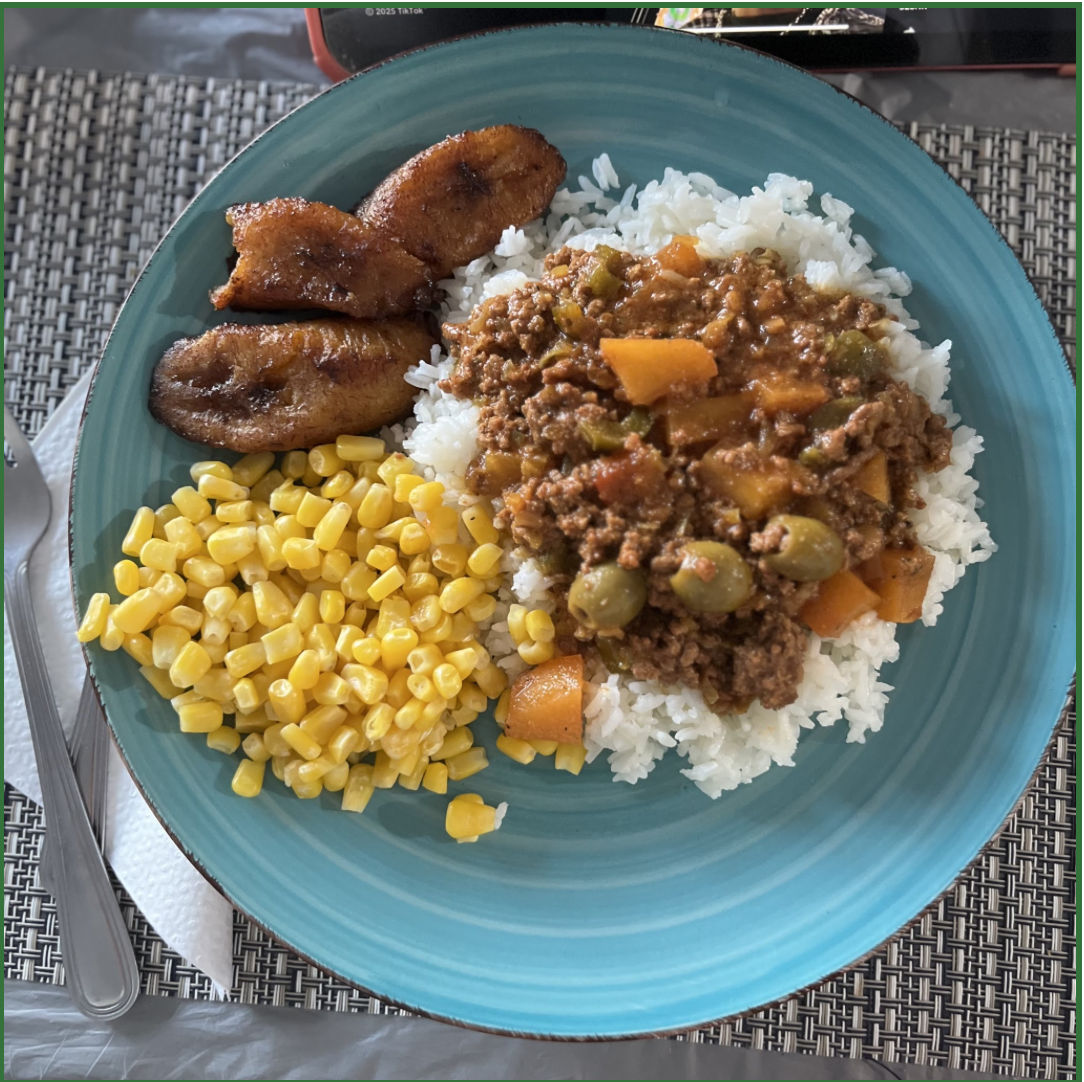
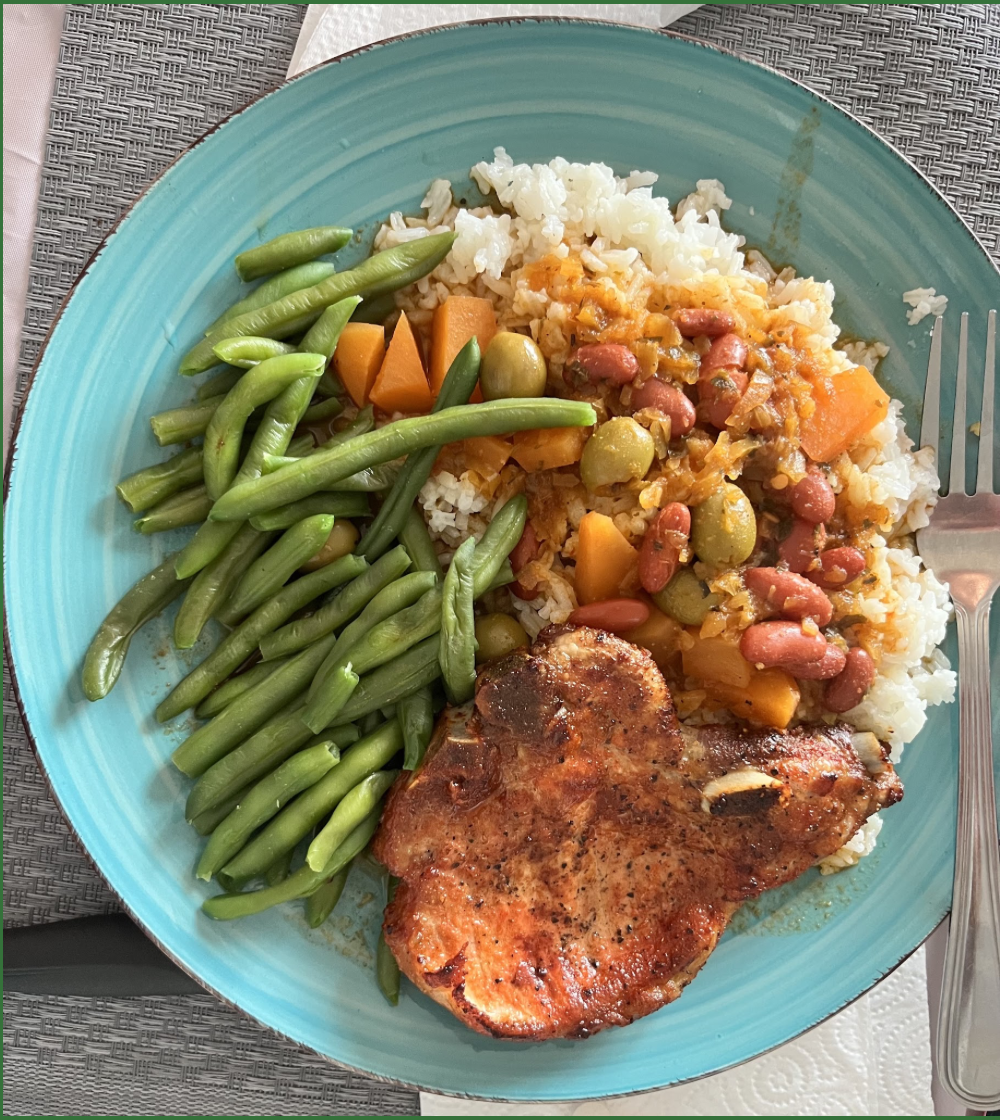
I know what you are thinking, no this piece is not entirely about rice and beans, it is a metaphor. It is about the Puerto Rican and Black culture I grew up with and love that some cannot find the beauty in. The reasoning behind “rice and beans is not peasant food” could be simple - it is a cheap meal accessible to the poor that was frowned upon by the rich. But is it really that simple? Truthfully, rice and beans were considered peasant food because it was fed to those who were enslaved and it was a popular meal among the colored community. It has become known to some as the “poor man’s meal.” But never once have I been eating dinner with my family, specifically rice and beans, and stopped to think, “Wow, this meal sucks.” All I think while I’m eating my mom’s arroz con habichuelas is how amazing all the flavors of my Puerto Rican culture create a meal that managed to bring my entire family together. Not even just Puerto Rican culture, when I am eating soul food from my dad’s culture I am able to enjoy African and indigenous flavors all while feeling the love poured into that dish, whether it is rice and beans or something else. So, what I am ultimately saying is that rice and beans is not the food of peasants but rather the food of those who know good cooking, love, and culture. What that translates to is - there is nothing disgusting about my culture because you do not see the beauty in it.
To many, rice and beans, a staple of Puerto Rican and Black culture are unfairly viewed by outsiders which ultimately connects to deeper stereotypes about these cultures. Rather than recognizing this meal as history, whether through the transatlantic slave trade experienced by both cultures or the families who represent this meal this dish is instead viewed with cultural stigma.Assumptions made ignore the cultural significance of rice and beans, which came from African and Hispanic cultures and eventually became an identity stretching across generations. Disrespectful attitudes toward the dish reflect general prejudices in regards to “minorities.” Puerto Ricans as well as the overall Hispanic community alongside African-Americans are devalued while the dishes created are remade and become “trendy” stripping away their significance. As emphasized, criticism of rice and beans is not necessarily about the dish, but rather about the cultural stereotypes of the people who enjoy the dish.
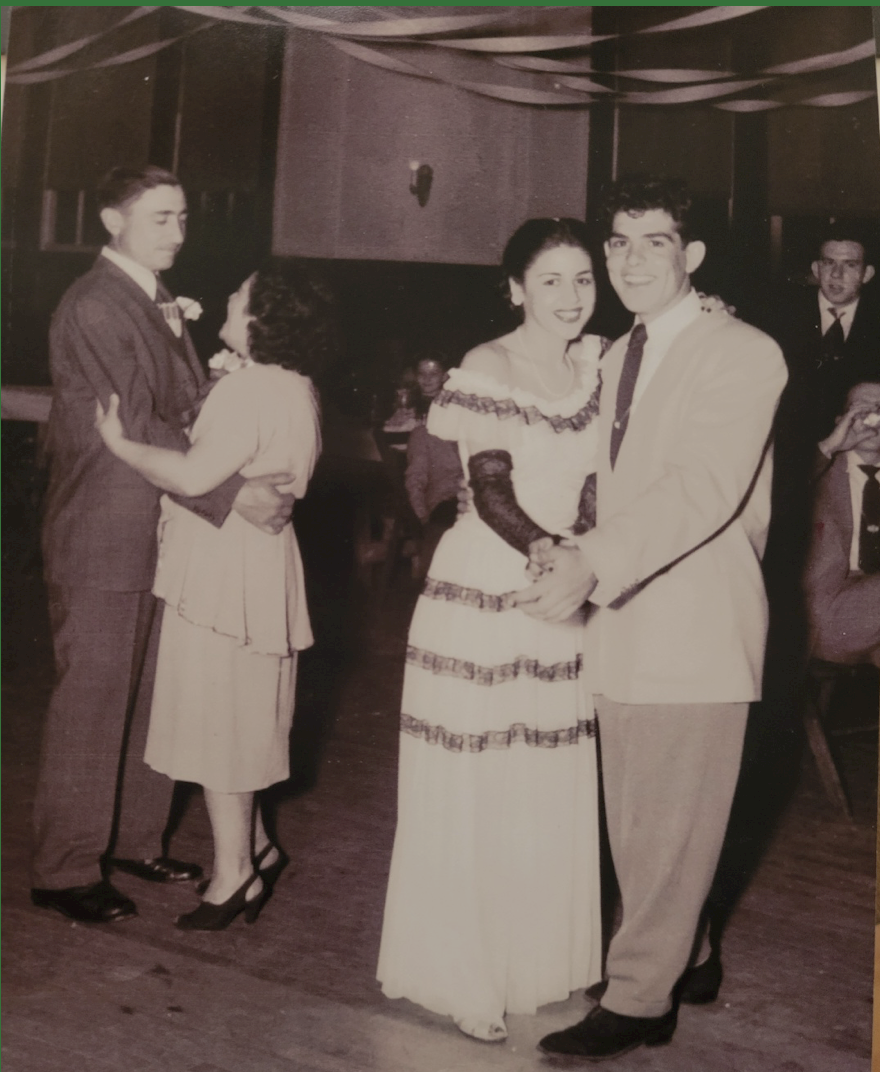
Continuing on, for Puerto Rican and Black communities, rice and beans represent more than a simple meal, they symbolize resistance and cultural continuity cultivated by centuries of history. When my great-great-grandparents arrived in the United States from Puerto Rico in the 1920s, they were thrust into an American society where their culture was not accepted. They eventually settled in Newark, New Jersey among other Hispanic people who understood why they fled the racism and hardships they faced by their own people in their country. Through their community, they were able to continue sharing their culture for generations to come. A large part of their culture was of course food, it became the centerpiece of gatherings and a transmission of values. Rice and beans, specifically, came to be through the mixing of Taino, African, and Spanish influences that came about unfortunately through colonization and the transatlantic slave trade. Through seasonings like sazón and cumin, techniques that became popular during migration, rice and beans managed to remain satisfying and affordable, allowing families to fill everyone. In Black communities, limited resources paved the way for traditions, and soul food became a main part of Black culture. For Puerto Rican and Black families this dish represents home and who they are as it carries stories of pride and resilience. What may be considered “outsider” food reflects deep history connected to discriminating against communities that can bring identity to those being stripped of one.
Rice and beans have become a way for Puerto Rican and Black cultures to reclaim pride in ways of life that are looked down upon. Looking back at not just rice and beans, any foods eaten by minorities or the working class were viewed as less, especially due to classism and racial stereotypes in regards to Puerto Rican and Black people. But today, this meal is recognized as a dish that brings strength, comfort, and a dish that even teaches history just by taking a bite. Reclaiming pride in cultural foods such as rice and beans contradicts the assumption that it is a meal only eaten by lower classes. Puerto Ricans and Black people have the ability to embrace rice and beans for their flavor, cultural significance, and comfort they bring many turning what was criticized into cultural pride.
To conclude, this essay was not just about rice and beans, but about history and cultural representation of Puerto Rican and Black communities. Meals like rice and beans tell stories of those who endured discrimination and hardship while still managing to preserve their culture and a sense of identity. What was once known as “peasant food” became a powerful meal showcasing creativity and unity within cultures. By reclaiming pride, it is proved that culture and strength are carried through something as simple as a meal.
Our Funders

LookUp
LookUp is a 501(c)(3) social venture dedicated to helping young people thrive in the digital world. We discover, empower, and support youth leaders. These leaders are taking action to raise awareness, inspire, and design a healthier, more inclusive, and responsible digital world.

Rutgers’ Center for Youth Social Emotional Wellness
The mission of the Center for Youth Social Emotional Wellness (CYSEW) is to promote mental health equity, which we define as the right to access quality mental health care, particularly for individuals and communities that have been historically marginalized based on race, ethnicity, socioeconomic status, gender, sexual orientation, disability status, immigration status, and geographical location, among others.